
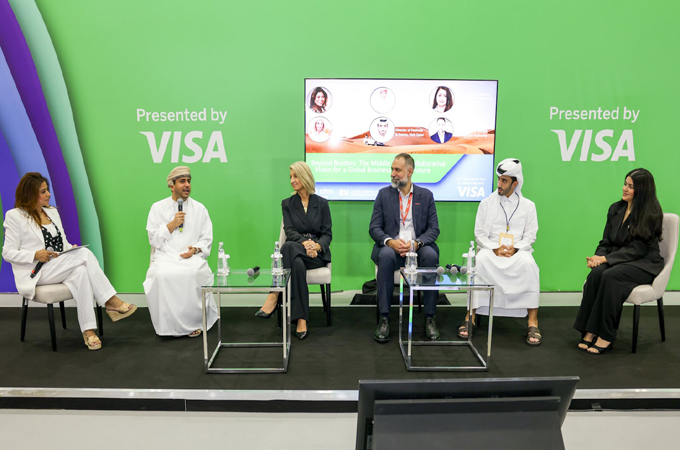
Gulf nations should highlight their individual tourism and business events offerings while presenting a more coordinated regional proposition to international visitors, regional industry leaders said at Arabian Travel Market (ATM) 2026 in Dubai.
The discussion, held on the second day of the 33rd edition
of ATM at Dubai World Trade Centre, brought together business events leaders
from Bahrain, Oman, Qatar and Ras Al Khaimah to examine how GCC destinations
can collaborate while maintaining their competitive identities.
The panel featured Maryam Toorani, Director of Marketing and
Promotions at Bahrain Tourism and Exhibitions Authority; Dr Debbie Kristiansen,
SVP Venue Development & Operations MEAA at OVG Middle East; Ahmed Al
Binali, Director of Festivals & Events at Visit Qatar; Iyad Rasbey, Vice
President Destination Tourism Development at Ras Al Khaimah Tourism Development
Authority; and Khalid Waleed Ramadhan Al Zadjali, Director of Oman Convention
Bureau. The session was moderated by Anju Gomes, CICD, Senior Regional
Director, ICCA ME.
Dr Kristiansen said the region needs to move away from being
viewed as a single destination and instead promote the distinct characteristics
of each country.
“Unfortunately, when people think about the Middle East,
[they think of it as] collective. But when you look at Europe, you don’t see it
as collective; you look at the individual countries within Europe. It’s exactly
the same in the Middle East. Every country and destination has something unique
to offer.”
Toorani said greater regional connectivity could help
attract more international visitors while allowing destinations to retain their
individual identities.
“I do genuinely believe that our growth is connected as a
region, and there is an opportunity to position ourselves as one connected
region without each of us losing the identity of our diverse countries. Having
more people coming to our destinations allows us to move away from that global
perception.”
Rasbey said business events should be integrated into wider
destination development rather than developed separately.
“Destinations shouldn’t look at developing [meetings,
incentives, conferences and exhibitions] in isolation. In Ras Al Khaimah, it’s
part of the development of the destination. While we are investing in our
infrastructure – the venues, the hotels – the [business events] development
goes in parallel. And this is what we have been doing for the last decade.”
Al Zadjali stressed that destinations should design events
around their existing characteristics rather than adapting themselves to meet
organisers’ expectations.
“We should not change ourselves [to fit with the events]. We
should design the events to match our destination. Because event organisers
have been to many parts of the world. They have experienced the best beaches,
the big historical areas, they have been to the ‘wow’ hotels – everywhere. What
they’re looking for is the experience, and that should be our focus.”
Al Binali highlighted the potential for major events to
create benefits beyond individual host destinations, pointing to the legacy of
FIFA World Cup Qatar 2022.
“The GCC needs to share the legacy of the delivery of any
major events, because it’s got that visibility – not only for the destination
itself, but also for the region.”
Danielle Curtis, Regional Portfolio Director – UAE, RX
Global, said the Gulf’s business events sector is continuing to expand, with
regional growth exceeding the global average.
“The Gulf’s business events market continues to move from
strength to strength, with the latest ICCA figures showing regional growth more
than double that of the global average. It is exciting to see industry leaders
capitalising on their nations’ unique offerings and cultural heritage, while
working closely together to present seamlessly connected experiences to
international visitors.”
ATM 2026 is being held under the theme Travel 2040: Driving
New Frontiers Through Innovation and Technology, examining the impact of
artificial intelligence, digital transformation, smart mobility and changing
traveller expectations on tourism.
The event has also introduced a refreshed brand identity,
reflecting its expansion beyond the exhibition floor into a year-round platform
connecting travel and tourism communities. The Experience Hub hosted seven
sessions on the second day, covering subjects including hotel revenue
management and transportation connectivity.
Now in its 33rd edition, ATM continues to bring together international travel and tourism stakeholders to develop partnerships, exchange industry knowledge and explore commercial opportunities across the sector. -TradeArabia News Service