
Technology is revolutionising the airport industry, introducing fundamental changes in how airports are designed, operated, financed, and experienced. Airports are now in a state of huge transformation, while the evolution of the user experience is advancing at an unprecedented rate.
As tectonic transformations redefine the global airport industry - from digitalisation and automation to sustainability and next-generation infrastructure - airports across the Middle East, Africa and South Asia (MEASA) are accelerating investments to future-proof capacity, efficiency, and passenger experience.
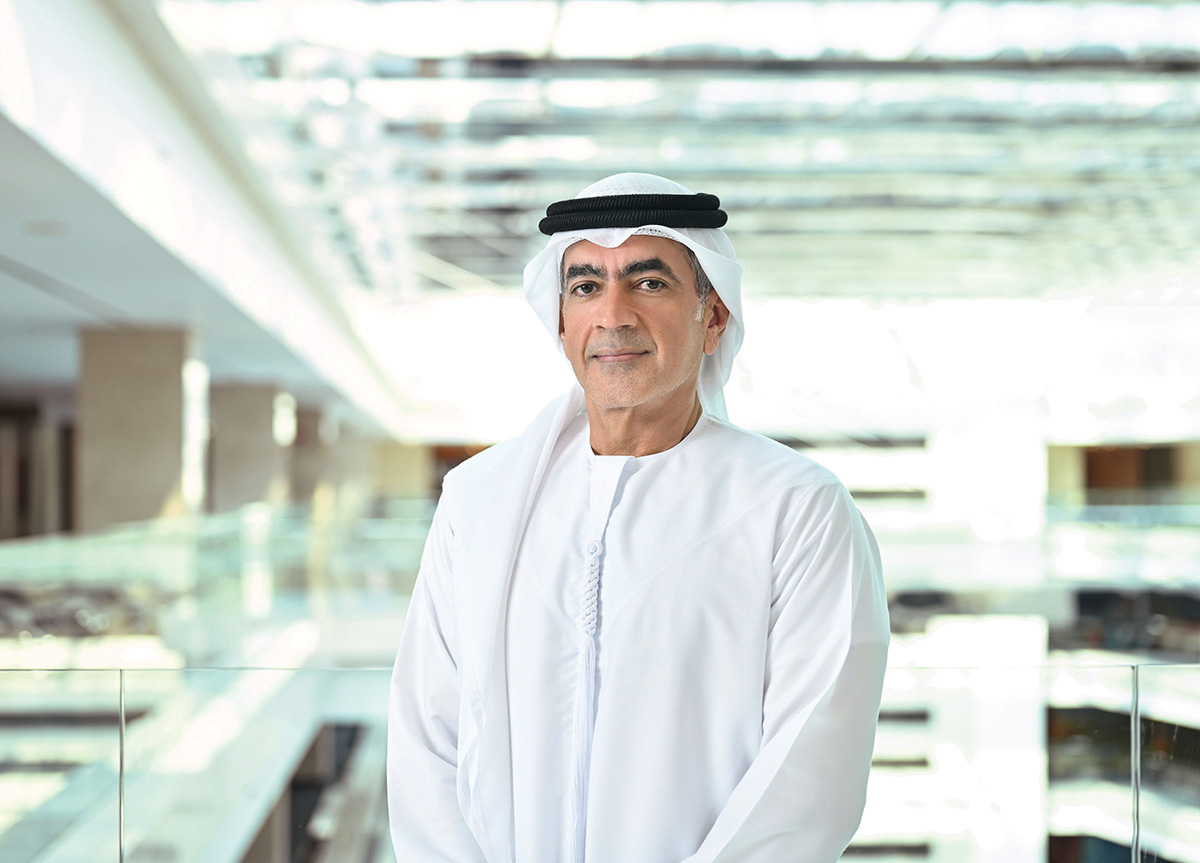
Jaffar Dawood, Divisional Senior Vice President for UAE Airport Operations at dnata, a leading global air and travel services provider, commented: “Ground handling is entering an important period of transformation, driven by new technology, evolving customer expectations and the industry’s collective commitment to sustainability.
“As a supporter of the GSE (Ground Support Equipment) Zone at Airport Show, dnata is pleased to contribute to a key platform showcasing the future of ground support equipment and airport operations.
"We continue to explore and adopt new technologies that will help us build smarter, more efficient operations today, while preparing for the future needs of Al Maktoum International Airport. Across our global network, we are deploying 800 new ground support equipment units in 10 countries, representing an investment of $110 million.
"As part of this programme, we are progressively replacing diesel-powered GSE with hybrid and electric alternatives, supporting our broader sustainability goals.”
Airport Show 2026, taking place at the Dubai World Trade Centre (DWTC) from October 12 to 14, emerges as the region’s essential meeting point where strategy meets implementation. The event brings together airport authorities, civil aviation leaders, operators, consultants, and technology providers to explore how these industry shifts translate into real projects, procurement opportunities, and operational innovation across some of the world’s fastest-growing aviation markets.
Reflecting these transformations, Airport Show provide a focused platform for discovery and collaboration.
The GSE Zone highlights the evolution of sustainable and autonomous ground support operations, showcasing electric, smart, and efficiency-driven airside solutions.
“We are also advancing automation across our operations. In the UAE, we have commenced trials of TractEasy EZTow autonomous baggage, helping reduce manual processes while enhancing safety and efficiency on the ramp.
"These initiatives reflect our long-term commitment to practical, scalable solutions that support the future of ground handling.”
The emerging airport model calls for seamless integration of advanced technologies for more efficient operations and improved experiences for the passengers. By 2030, airport terminals will be defined by flexible infrastructure and seamless integration of advanced technologies with eco-friendly practices for more efficient operations and an improved passenger experience.
GSE innovations are focused on sustainability and automation, driven by electric, IoT-enabled, and autonomous technologies. The GSE market size is set to grow to $19.77 billion by 2034.
Currently, the GSE innovations are focused on sustainability and automation, driven by electric, IoT-enabled, and autonomous technologies. Airports are transitioning to electric GSE (e-GSE) to reduce emissions, AI-driven autonomous tractors, enhanced safety systems (anti-collision), and IoT for predictive maintenance.
There is a widespread adoption of electric baggage tractors, belt loaders, and passenger steps. Self-driving tow tractors and baggage vehicles are reducing human error and boosting efficiency on the apron. Solar-powered IoT devices are being used for real-time tracking, asset management, and predictive maintenance to reduce downtime. AI-powered vehicles with robotic arms are being used for automatic cargo loading/unloading during challenging weather conditions. High-tech GSE tunnels are being built for safer, more efficient airside transport.
For connectivity, airports are transitioning to fibre-based, high-speed networks and private 5G. AI, automation, and robotics are now the backbone of the intelligent airport.
Automated gates and smart baggage systems have paved the way for the ‘smart airport’ and ‘self-service’ concept.
There is a widespread adoption of IoT, RFID, and Bluetooth technology.