
For decades, hospitality higher education has relied on a familiar formula: lectures, textbooks, memorisation-based exams, and hypothetical case studies. This approach has served many institutions well, but today, two forces are converging to make its limitations more consequential than ever before. First, the Gulf’s hospitality sector is expanding faster than its talent pipeline. Second, generative AI has fundamentally disrupted what a traditional classroom assessment can actually measure.
The rapid rise of generative AI has made this moment particularly urgent. If assessments can be completed by a machine, educators must ask a hard question: What is being measured, and does it prepare anyone for a live service environment?
The importance of practical learning
The answer is not to resist technology, but to recognise what it cannot replace. Hospitality has always been a hands-on profession. However, in a region racing to meet ambitious tourism targets, and in a world where AI can replicate theoretical knowledge on demand, practical learning is no longer a pedagogical preference - it is a strategic necessity.
In an industry where value is created through experience, not products, the ability to perform in real situations is fundamental. What is proven to work is an approach called authentic learning. The concept is simple: students learn by tackling real problems for real stakeholders, under real constraints. This means moving beyond the classroom and into operational environments where decisions have consequences.
Authentic learning rests on three principles, including students generating meaning through engagement with complex challenges, moving beyond surface responses to evidence-based solutions, and producing work that creates value beyond the classroom.
The hidden challenges
Practical, experience-based education is not a new idea. The Swiss model of hospitality education - built on alternating academic study with real operational experience - has championed this approach for over six decades, and Les Roches has been at its heart. What is new is the scale of the challenge and the urgency of embedding this model more deeply across the sector. So, what makes it difficult to scale?
Logistics are a genuine challenge. Coordinating field visits requires significant planning, assessing project-based work demands more faculty time, and not all institutions have established relationships with industry partners. At Abu Dhabi Hospitality Academy - Les Roches, students spend six months performing on-site work experience as part of their curriculum from Year 1 and have multiple industry partners that support an authentic learning approach.
Across the Gulf, industry leaders are already shifting expectations. Major hotel groups are consolidating front-of-house, concierge, and guest relations roles into single multi-skilled positions - demanding employees who can move fluidly between guest interaction, digital systems, and operational problem-solving within a single shift. The World Travel and Tourism Council projects a shortage of 8.6 million hospitality employees globally by 2035. There is no time to waste on pedagogy that does not deliver.
A path forward
The conditions that make practical learning essential are not going away. If anything, they are intensifying. For institutions navigating this moment, there are four priorities: first, assessments should be redesigned around real-world problems; second, institutions must invest in meaningful industry partnerships, where students solve live operational challenges; third, educators need support to shift from lecturing to facilitation; and finally, AI should not be viewed as a threat, but as a reason to double down on what makes hospitality education human: judgment, empathy, and the ability to navigate uncertainty.
The window for getting this right is narrowing. AI is reshaping what theoretical knowledge is worth, and the Gulf’s tourism ambitions are outpacing its talent pipeline. These forces did not exist in the same combination a decade ago, but they exist today. That is why practical, authentic learning – long embedded in the Swiss hospitality education tradition - matters more now than at any point in the past 60 years.
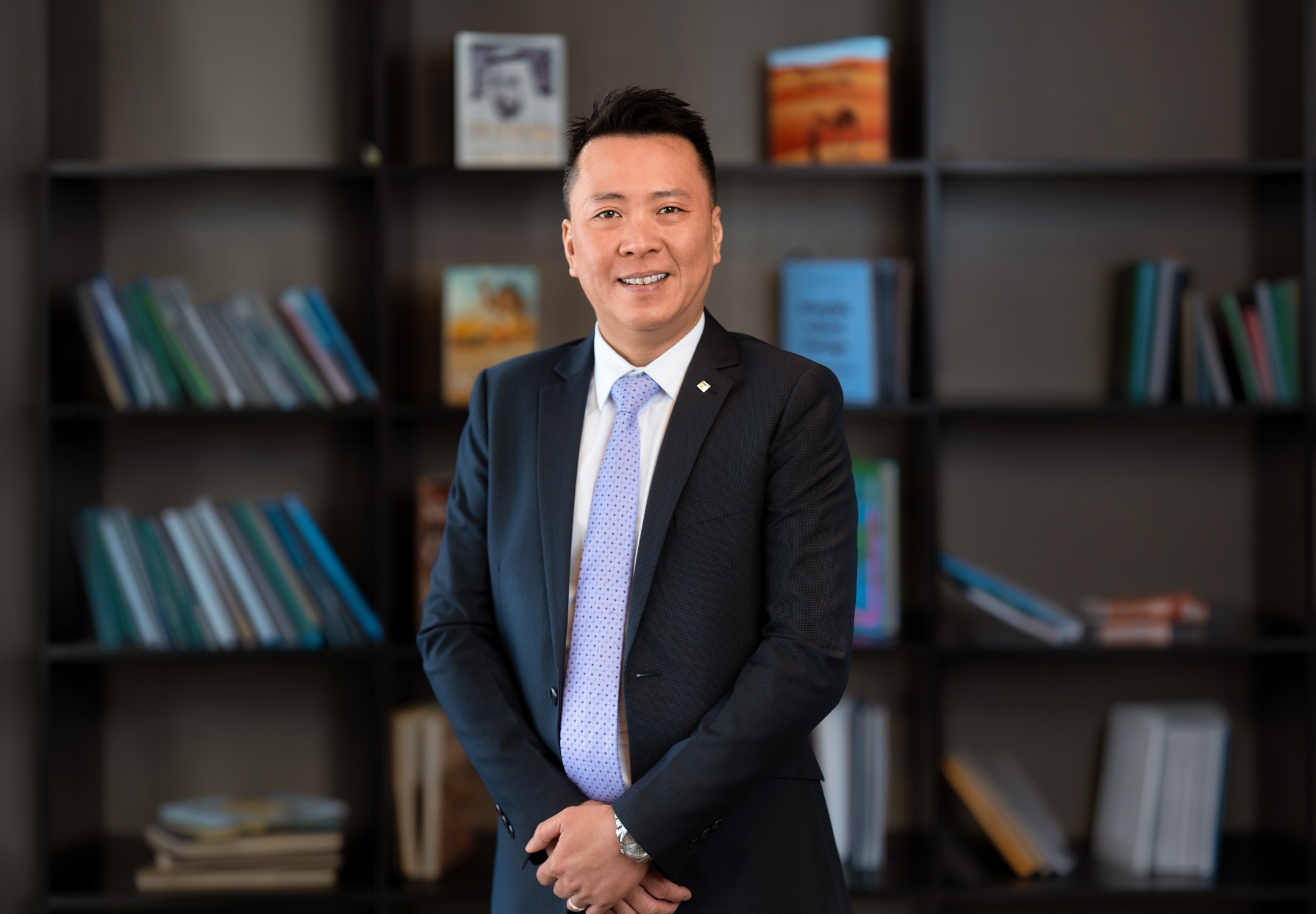
* Professor Edmund Goh is Assistant Dean - Research & Innovation at Abu Dhabi Hospitality Academy - Les Roches
Find Abu Dhabi Hospitality Academy - Les Roches on Stands ME0620,ME0650