
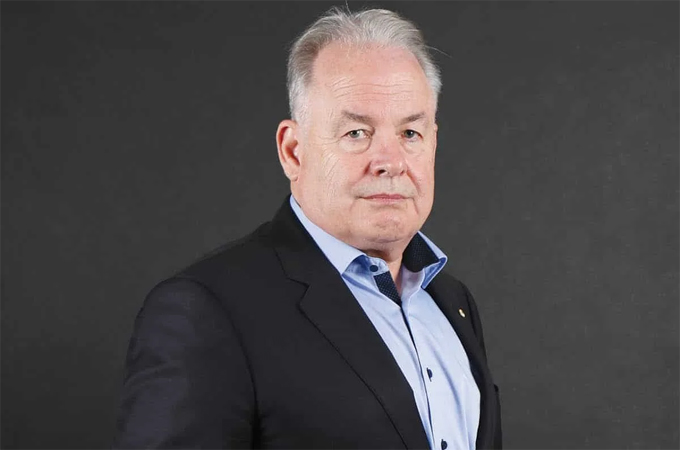
The Gulf States can come out of the current conflict as even stronger tourism destinations, said aviation leader James Hogan in a speech at the Travel Daily Media Global Summit in Bangkok.
“The Gulf offers a great product, great promotion and,
critically, a welcome from great people.
As they emerge from the conflict, which we hope happens promptly, these
destinations can bounce back even stronger.
“But this will require more than using price as a lever to
drive traffic. They need to focus on the
underlying strengths of the destination brands and show their doors are open
again.”
James Hogan, Knighthood Global Chairman, outlined how the
Arabian Gulf states have built some of the world’s most resilient destination
brands, and why unity and decisive leadership are now more important than ever.
Drawing on decades of experience, including his role in
building Etihad Airways into a globally recognised aviation group, Hogan said
the Gulf’s rise has been underpinned by visionary leadership, clear national
ambition and sustained strategic investment aligned behind a single goal:
positioning the region as a leading global destination.
“Destination branding, at its core, is nation-building,”
Hogan said.
He noted that this model has enabled Gulf nations to respond
decisively to global disruptions, adding that the current geopolitical
environment presents both risk and opportunity.
“Moments of great crisis are also moments of great
opportunity, for those willing to invest, align and look beyond the immediate
horizon,” he said.
Hogan acknowledged that geopolitical tensions are creating
heightened uncertainty across tourism and aviation. While infrastructure and
operational resilience remain strong, shifting traveller sentiment is impacting
demand, airline performance and overall market confidence.
“The consequences are real,” he said. “Confidence, one of
the most valuable assets in global travel, has been dented. This is why clarity
of leadership and unity of purpose are essential.”
He emphasised that the Gulf has historically responded to
global shocks, from financial crises to the COVID-19 pandemic, not by
retreating, but by accelerating investment, enhancing product quality, and
strengthening connectivity.
A central theme of Hogan’s address was the need for deeper
alignment across the tourism ecosystem. He stressed that airlines, airports,
tourism authorities, hotels, attractions, and governments must operate as an
integrated system rather than as fragmented players.
“In aviation, tourism, and nations, as in companies, teams
win,” he said. “When efforts are aligned, the result is far greater than the
sum of individual parts.”
Hogan also highlighted the importance of positioning the
Gulf as a cohesive regional proposition.
“The Gulf benefits when it is seen as a whole: welcoming,
safe, connected, and world-class,” he said. “This is not a moment for zero-sum
thinking, but for strengthening a unified regional narrative that can compete
globally.”
Looking ahead, he pointed to advances in aviation
technology, including ultra-long-haul aircraft, which will place greater
emphasis on the intrinsic appeal of destinations.
“In the future, travellers will not stop in the Gulf because
they have to; they will stop because they want to,” he said. “That makes
destination branding, experience and storytelling more important than ever.”
Hogan concluded by reaffirming his confidence in the
region’s long-term outlook, citing strong fundamentals including
infrastructure, talent, ambition and investment capacity.
“The Gulf has everything it needs to succeed,” he said.
“What matters now is how those strengths are brought together, with clarity,
cooperation, and confidence.” -TradeArabia News Service