
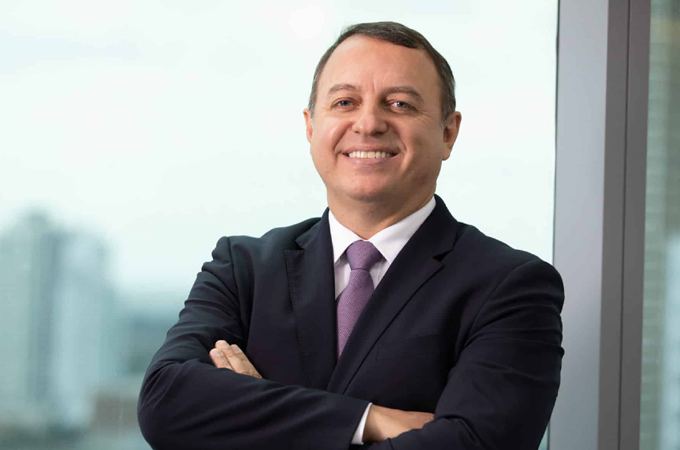
Airports risk wasting money on technology that delivers only marginal improvements to passenger services and revenue if they fail to establish clear requirements before approaching suppliers, former Airports Council International (ACI) Director General Luis Felipe Oliveira has warned.
Oliveira, Executive Director and CEO of Exactly Consulting
and Services Sarl, made the comments during a World Aviation Festival webinar,
“From passengers to guests: A new ethos for airport development”, ahead of the
event’s return to Lisbon from October 13-15.
“In the end, you get what you ask for. Without clear
requirements, airports risk investing money in things that won’t provide a
great improvement for the airport and for its guests,” he said.
Oliveira identified the way airports develop requests for
proposals (RFPs) as a major weakness in technology adoption. He said investment
decisions should be tied to measurable operational, passenger or commercial
outcomes, rather than based primarily on technological sophistication.
“The idea to link every investment with the value of the
outcome is something that airports need to start thinking about more. Not
simply sophistication in technology, but what they can get out of the
technology to improve passenger services and, of course, to improve revenues,”
he said.
Airports are increasingly adopting artificial intelligence,
biometrics, facial recognition, robotics, digital identity and automated
passenger-processing systems. However, Oliveira stressed that the right
solution depends on each airport’s individual characteristics, including size,
passenger traffic, route network, terminal configuration and operational
complexity.
He warned that advanced systems may not provide sufficient
returns for smaller and mid-sized airports, while overly basic specifications
can result in technology that fails to improve the passenger experience.
“When you specify only the basics, you receive only the
basics, and the basics sometimes won’t help improve the customer experience. To
articulate the expected level of performance and the impact on passenger
experience, the technology needs to align with the operational reality of this
specific airport,” Oliveira said.
He also called for airports to develop technology roadmaps
covering the entire passenger journey before selecting individual systems or
suppliers. Interoperability, he said, is essential because airports must
coordinate airlines, ground handlers, government agencies, border authorities
and technology providers.
“That’s why airports need to define a clear roadmap for
technology that will help them identify the right partners. They need solutions
that are not linked to only one provider, but provide opportunities to be
interoperable,” he said.
Oliveira also stressed that technology should complement,
rather than replace, human service, particularly as airports serve ageing
passengers and travellers with varying levels of digital confidence.
“Despite all the advantages of technology, it cannot replace
the human services, the courtesy, the empathy, and the problem-solving skills
that remain essential in lounges, food and beverage, the customer service desk
– and every other point where passengers need support beyond what automation
can provide,” he said.
He added that airports should identify their own commercial
and community roles, particularly as the airport city model expands.
“Each airport, in the end, needs to discover its own
vocation in terms of what kind of services it can provide for its customers,”
Oliveira said. -TradeArabia News Service