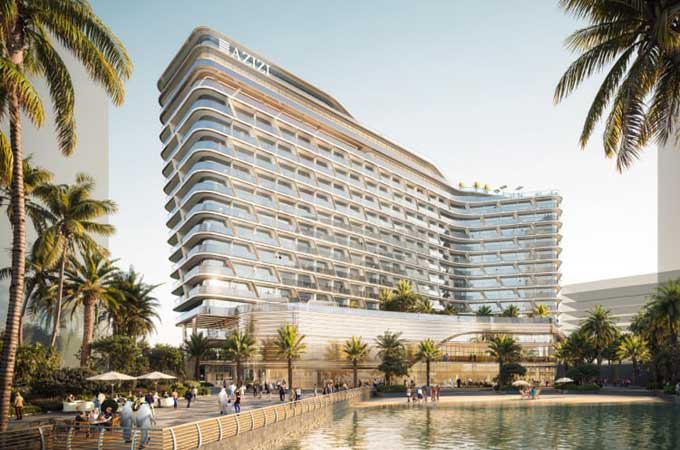
RMJM, a leading global architecture and design network, has announced the completion of the concept design stage for the Azizi Venice 4-Star Hotel, a new waterfront hospitality project of leading UAE group Azizi Developments within the masterplan in Dubai South.
The concept responds to its lagoon setting through fluid massing, panoramic balconies, and shaded outdoor spaces, maximising views while supporting climate-responsive design principles, said RMJM in its LinkedIn post. Active ground-level uses and landscaped promenades reinforce connectivity to the public realm and contribute to a vibrant waterfront destination, it stated.This milestone reflects RMJM’s integrated approach to hospitality design, aligning architectural identity, guest experience and sustainable performance within emerging mixed-use communities, it added.An Venetian-themed waterfront community in Dubai South, the Azizi Venice boasts more than 36,000 residential units across 100+ apartment complexes and over 109 ultra-luxury mansions and villas as well as retail, dining, entertainment, and leisure facilities.Positioned along the lagoon and oriented to maximise primary views toward water, landscape, and cultural landmarks, the 4-Star hotel is conceived as a destination in its own right - blending hospitality, leisure, and public life within a highly activated urban setting, said RMJMted. defining feature of the project is its fluid architectural massing, which responds directly to site geometry, view corridors, and solar orientation. The building’s form steps and curves to reduce visual bulk while enhancing guest privacy and maximising balcony exposure to prevailing breezes and shaded outdoor spaces. Continuous balconies and generous terraces are not aesthetic gestures alone, but functional elements that support passive cooling and outdoor living throughout much of the year.According to RMJM, sustainability is embedded in the project’s architectural logic rather than treated as an overlay. The façade system integrates horizontal fins, recessed glazing, and textured light-toned materials to reduce solar heat gain while maintaining high levels of daylight penetration. The building’s orientation, façade modulation, and balcony depth collectively contribute to improved thermal performance and reduced reliance on mechanical cooling."Landscape design plays an active environmental role, with extensive planting, shaded promenades, and podium-level greenery contributing to microclimate cooling and enhanced pedestrian comfort. Rooftop amenities and terraces are designed to balance leisure functions with shading strategies and wind mitigation, reinforcing outdoor usability while limiting heat accumulation," said a company spokesman."At podium level, the hotel seamlessly connects to the wider Azizi Venice public realm, integrating retail, dining, and leisure functions with waterfront walkways and landscaped open spaces. This permeability supports walkability, reduces internalised circulation demand, and strengthens the hotel’s role as a social and urban anchor within the masterplan," he explained.The project includes a carefully planned mix of hotel rooms and serviced apartments, supported by a full suite of hospitality amenities including dining venues, wellness facilities, rooftop lounges, and leisure decks. Interior public spaces are conceived as extensions of the landscape and waterfront, reinforcing visual continuity between inside and outside."The Azizi Venice 4-Star Hotel exemplifies RMJM’s approach to contemporary hospitality design in the Middle East - where architectural identity, environmental responsiveness, and commercial performance are developed as a single, integrated design strategy," he added.-TradeArabia News Service
Construction & Real Estate
RMJM completes concept design for Azizi Venice 4-Star Hotel