
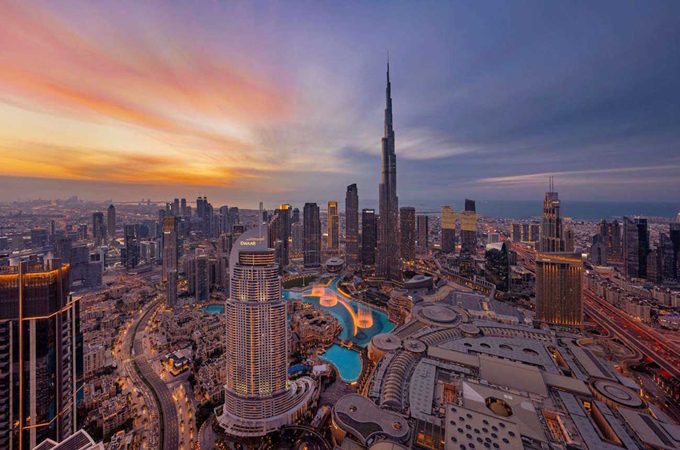
Arabian Travel Market (ATM) 2026 will highlight Dubai’s resilience and global tourism leadership as the event returns from September 14–17, 2026 at Dubai World Trade Centre.
The show aims to
strengthen industry connections, support business continuity, and provide
global travel professionals with greater flexibility and engagement
opportunities amid changing market conditions.
“Supported by Dubai’s world-class
infrastructure, operational resilience and strong public-private sector
coordination, ATM 2026 remains firmly positioned to bring the tourism industry
together and support long-term recovery and future growth.”
Amid a range of strategic government
initiatives, including
Hoor Al Khaja, Senior Vice President,
International Operations at Dubai Corporation for Tourism and Commerce
Marketing (DCTCM), part of the Dubai Department of Economy and Tourism (DET),
said: “Dubai’s approach, guided by the city’s visionary leadership, has always
been rooted in long-term planning, agility and strong collaboration across
government and industry stakeholders. Throughout recent regional developments,
the city has remained open, operational and welcoming, reinforcing the trust
placed in Dubai by travellers, businesses and international partners worldwide.
The city continues to provide a powerful platform for major events and meetings
across key sectors, including tourism, and we look forward to engaging with the
international travel community at ATM 2026.”
Air connectivity is steadily returning, and
as a result, inbound tourism is expected to increase.
The UAE announced the full resumption of
air traffic operations on 2 May, while Qatar, Bahrain, and Kuwait have also
opened their airspace.
Emirates has restored 96% of its global
network, operating to 13
Further reinforcing confidence in travel to
the region, the UK government has lifted its travel warning to the UAE,
reflecting improved regional stability and supporting the recovery of
international travel demand.
Australia has also downgraded its travel
advice for several Middle Eastern destinations, including the UAE,
acknowledging the easing of regional tensions and providing additional
reassurance for travellers, tourism businesses and event organisers planning
future travel to the region.
Research presented by STR, ATM’s official
research partner, shows that hotel occupancy levels across key GCC markets have
continued to recover steadily in recent weeks, supported primarily by strong
domestic demand and the continued operation of core tourism infrastructure.
Dubai has maintained stable hospitality
performance throughout this period, reinforcing the strength of its diversified
tourism economy, advanced infrastructure and coordinated public-private sector
response.
The findings support broader industry
expectations that destinations with strong connectivity, established tourism
ecosystems and proactive government support, such as Dubai and the wider UAE,
are likely to recover more quickly as regional conditions stabilise.
Curtis continued “Dubai has consistently
demonstrated resilience, stability and leadership during periods of global
uncertainty, supported by proactive governance, world-class infrastructure and
a highly coordinated tourism ecosystem. The city remains fully operational,
connected and firmly focused on the future.
“ATM 2026 will play an important role in
bringing the international travel community together at a time when
collaboration, confidence and long-term planning are more important than ever.
By convening industry leaders, policymakers, tourism authorities and innovators
from around the world, ATM will continue to support meaningful partnerships and
contribute to the future growth and resilience of global tourism.”
Under the theme “Travel 2040: Driving New
Frontiers Through Innovation and Technology”, ATM 2026 will place increased
emphasis on resilience, adaptability and future preparedness across the global
travel ecosystem.
The extensive ATM conference programme will
examine the evolving challenges and opportunities shaping international
tourism, with dedicated sessions exploring crisis management, destination
resilience, traveller confidence, aviation continuity, digital transformation
and sustainable long-term growth strategies.
Across the Global Stage, Future Stage and
Experience Hub, policymakers, tourism authorities, researchers and technology
leaders will discuss how destinations can strengthen preparedness, improve
operational agility and build greater resilience against geopolitical, economic
and environmental disruption.
Research-led sessions delivered in
partnership with organisations including STR, Tourism Economics, an Oxford
Economics company, GSIQ and ICCA will provide strategic insight into shifting
traveller sentiment, global mobility trends, destination competitiveness and
the future of tourism demand.
Euromonitor International’s Stephen Dutton,
Global Insight Manager - Travel, will deliver a keynote session titled The
State of Travel: Inflation, Polycrisis & the New Travel Reality.
Speaking ahead of the event, he said:
“Travel spending surged to record levels in 2025, outpacing GDP growth in many
markets. This is a powerful testament to the enduring demand for meaningful
cross-border experiences. This resilience is not incidental - travel has
repositioned itself as an attainable luxury that consumers actively protect,
even amid mounting economic and geopolitical pressures, and when consumers need
to make trade-offs elsewhere to do so. Travel allows consumers to escape the
day-to-day challenges they face and to experience the world positively.” -TradeArabia News Service